




Standing in front of a wall of baby carriers — or a dozen open tabs comparing them online — it’s easy to feel like you need an engineering degree to pick the right one. You don’t. Almost every carrier decision comes down to four things: your baby’s current weight and age, which carry positions you actually need, how it’s made, and whether it’s been independently safety tested. Here’s how to work through each one.
Start With Weight and Age, Not Marketing
Every carrier is built around a weight range, and that range is the single most important spec on the page — not the color, not the brand story. Most ergonomic carriers designed to go from newborn to toddler cover roughly 7–44 lb (3–20 kg), from birth to about 36 months, though the exact ceiling varies by model — some sit closer to 40 lb. If you’re buying for a newborn specifically, check that the carrier explicitly supports a newborn hold or narrow-seat setting; not every “0+” carrier actually fits a 7-pound baby well without an insert.
Decide Which Carry Positions You’ll Actually Use
Carriers typically offer some combination of four positions:
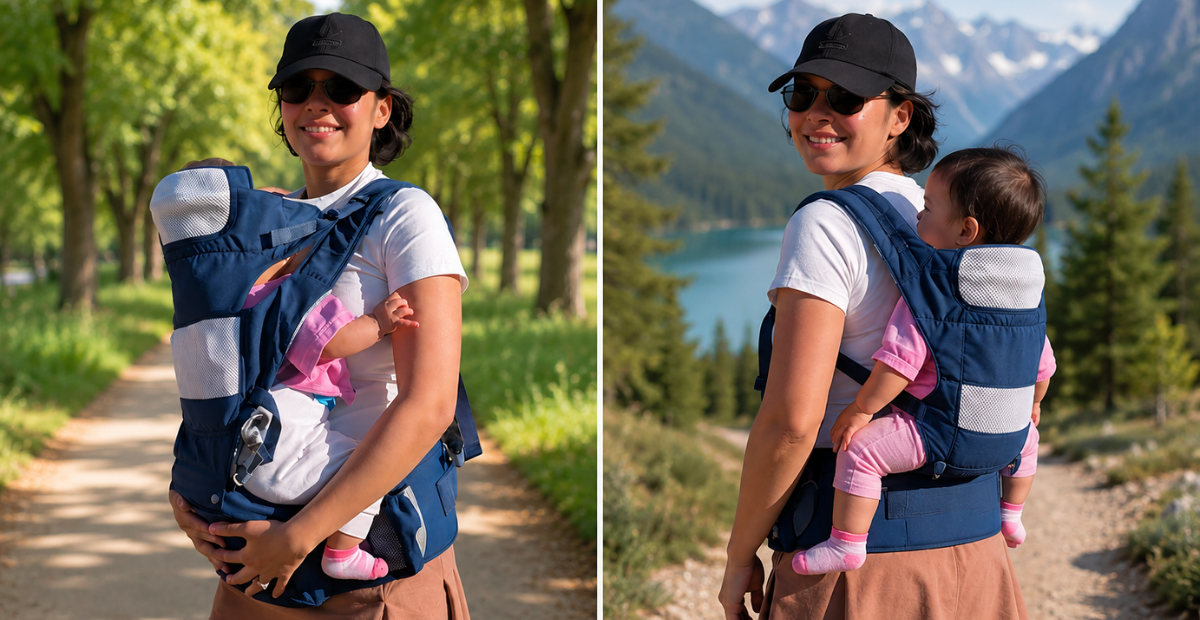
- Front carry, facing inward — the starting position for every carrier, usable from birth.
- Front carry, facing outward — for babies with strong, independent head control, usually from around 6 months, and generally recommended in short sessions rather than for extended wear.
- Back carry — once your baby can sit unassisted, typically 6 months and up.
- Hip carry — offered by some carriers as a secondary position for toddlers.
If you only ever plan to do front carries, a simpler two-position carrier is genuinely enough. If you want to carry hands-free while your toddler naps on your back, make sure back carry is explicitly supported — not every carrier converts cleanly.
Look for the “M” Position Seat
An ergonomic carrier should hold your baby with their knees higher than their bottom and their thighs supported from knee to knee — the “M” position recommended by hip-health researchers, including the International Hip Dysplasia Institute. A carrier that only supports your baby under the bottom, with legs hanging straight down, isn’t doing this job. Look for a seat that’s adjustable — narrow for a newborn, wider as your baby grows — rather than a single fixed size.
Check for Independent Safety Testing
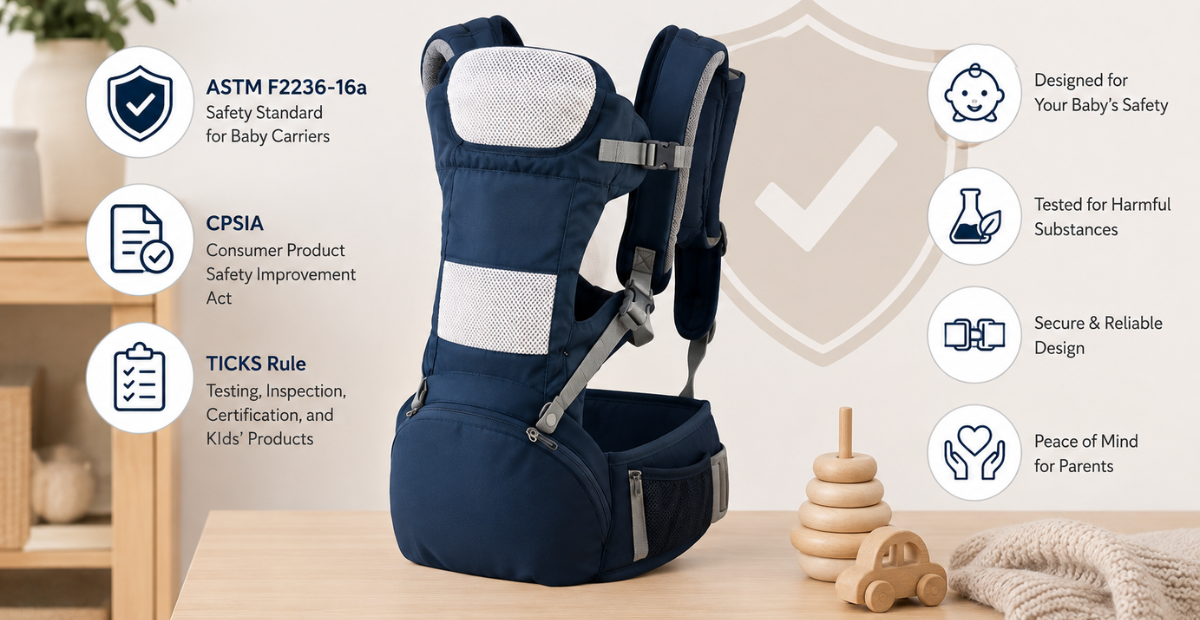
In the US, soft infant and toddler carriers are covered by ASTM F2236-16a, a federal safety specification enforced by the Consumer Product Safety Commission. Health Canada references the same standard in its own babywearing safety guidance, so a carrier tested to ASTM F2236-16a is meeting the bar referenced on both sides of the border. Look for the standard named explicitly on the product page or label — if a listing only says “safety tested” without naming a standard, ask which one.
Fabric: What You’re Actually Wearing All Day
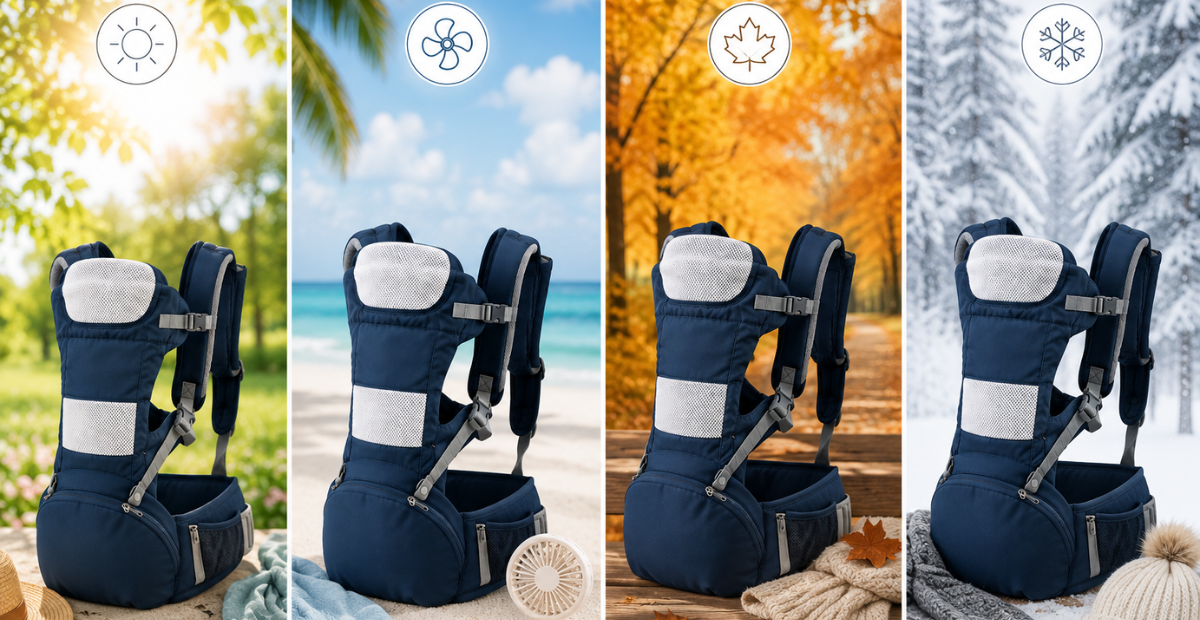
Cotton is breathable, soft against newborn skin, and typically machine- or hand-washable — a solid default for most climates. Cotton-linen blends add a bit more structure and durability for a carrier you’ll use daily for years. A polyester-lined inner panel under a cotton outer shell tends to run lighter and more breathable, which matters if you’re in a warmer climate or layering the carrier under a coat in winter.
Comparing Three Common Carrier Styles
| Everyday cotton carrier | Full-feature convertible carrier | Lightweight certified carrier | |
|---|---|---|---|
| Best for | Simple daily wear, front carries | Parents who want every position, including back carry | Warm climates, the lightest possible build |
| Weight range | ~7–44 lb | ~7–44 lb | ~7–40 lb |
| Carry positions | Front in, front out, back | Front in, front out, back, backpack-style | Newborn hold, front in, front out, back |
| Fabric | 100% cotton | Cotton / cotton-linen blend | Cotton outer, breathable inner lining |
See our full carrier lineup for exact specs, or jump straight to the Classic Cotton, Premium Convertible, or Lightweight carrier pages.
Frequently Asked Questions
Do I need a different carrier for a newborn versus a toddler?
Not necessarily — most ergonomic carriers are designed to grow with your baby via an adjustable seat, so one well-fitted carrier can realistically take you from newborn hold through toddler back carry.
What’s the difference between a “safety tested” carrier and an ASTM-certified one?
“Safety tested” without a named standard is a marketing phrase; ASTM F2236-16a is a specific, independently verifiable federal specification referenced by both the US CPSC and Health Canada. Look for the standard named explicitly, not just implied.
Is a more expensive carrier automatically better?
Not automatically — price often reflects fabric and the number of carry positions, not safety. A carrier at any price point should still name its safety standard and support the M-position seat.