


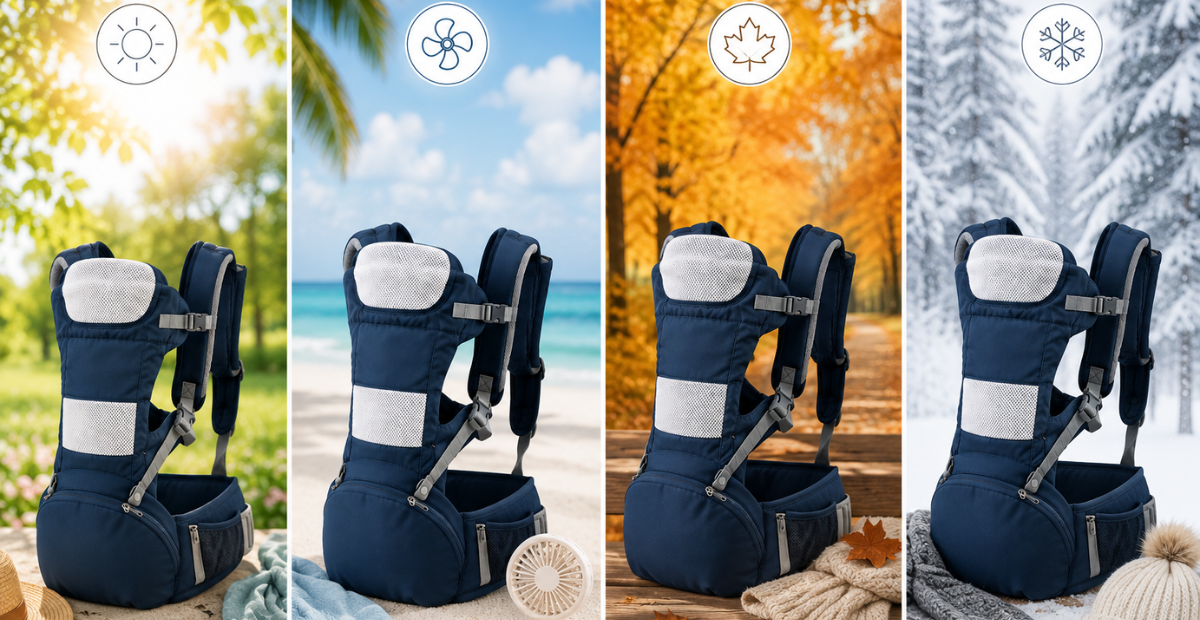
Babywearing through the seasons means adjusting your approach as the weather changes. A carrier that’s perfect in mild spring weather can feel very different in a July heatwave or a Canadian January — two bodies generate more heat than one, and the fabric between you adds another layer on top of that. None of this means you should stop babywearing seasonally; it just means adjusting a few things as the weather shifts.
Babywearing in Hot Weather: Avoiding Overheating
Two bodies pressed together generate real shared heat, so on hot days it’s worth being deliberate: dress your baby in light, breathable layers rather than relying on the carrier alone to regulate temperature, carry in the shade when possible, and offer extra fluids (or extra nursing sessions) since a warm baby loses fluid faster. Check the back of your baby’s neck periodically — damp, hot, or flushed skin is your cue to find shade, loosen a layer, or take a break.
Choosing Breathable Fabric
Fabric choice matters more in summer than any other season. A carrier with a polyester-lined inner panel under a cotton outer shell tends to run noticeably lighter and more breathable than a heavier cotton-linen blend — worth considering if you live somewhere with genuinely hot summers, or if you’re carrying frequently outdoors. A 100% cotton carrier is still a reasonable choice in most climates; it’s really the heaviest, most structured blends that feel warmest for extended summer wear.
Babywearing in Cold Weather
Winter babywearing works well with a layering approach rather than one heavy coat over everything. A common method: dress your baby in their normal indoor layers, wear the carrier over that, then use a babywearing-specific coat, coat extender panel, or your own zip-up jacket over both of you — rather than bundling your baby in a bulky snowsuit underneath the carrier straps, which can interfere with a snug, safe fit and make it harder to maintain the correct hip position.
One counterintuitive point: babies can overheat in winter carriers too, especially once you’re indoors with your coat still zipped over both of you. Check in the same way you would in summer — feel the back of the neck, and unzip or remove a layer if your baby feels warm or flushed.
Signs Your Baby Is Too Hot or Too Cold
- Too hot: flushed cheeks, damp hair or neck, fussiness, rapid breathing.
- Too cold: cool hands or feet (a normal baseline for babies, but check the torso and neck too), pale or mottled skin, unusual quietness or lethargy.
The torso and neck are more reliable temperature indicators than hands and feet, which run cooler than the rest of the body in babies regardless of season.
Year-Round Carrier Care Tips
Salt stains from summer sweat and winter road salt splash both benefit from prompt washing — check your carrier’s care label (most are hand wash or gentle machine cycle, no bleach, no tumble dry, lay flat to dry) rather than letting stains set in. Store your carrier folded in a dry spot between seasons rather than left in a damp diaper bag, which can encourage mildew on natural fibers like cotton.
Frequently Asked Questions
Is it safe to babywear in extreme heat?
Yes, with precautions — seek shade, dress your baby in light breathable layers, hydrate more often, and take breaks if either of you shows signs of overheating.
What’s a “babywearing coat” and do I need one?
It’s a coat (or a zip-in panel for an existing coat) designed to fit over both a wearer and a carried baby. It’s not required — a large jacket you can zip over both of you works too — but purpose-made options tend to fit more comfortably for regular winter use.
Should I put my baby in a snowsuit under the carrier?
Generally no — bulky snowsuits can push your baby’s legs into an unnatural position and make it hard to check the M-position fit. Regular indoor layers under the carrier, with an outer layer over both of you, works better.