




Front carry vs. back carry isn’t really a competition — it’s a natural progression. Every carrier journey starts the same way — front carry, facing you, from your baby’s first weeks. Eventually most parents want more: a curious baby who wants to face outward, or the chance to carry hands-free on your back while you get things done. Here’s how to know when you’re ready for each, and how to do it safely the first time.
Front Carry, Facing Inward: The Starting Position
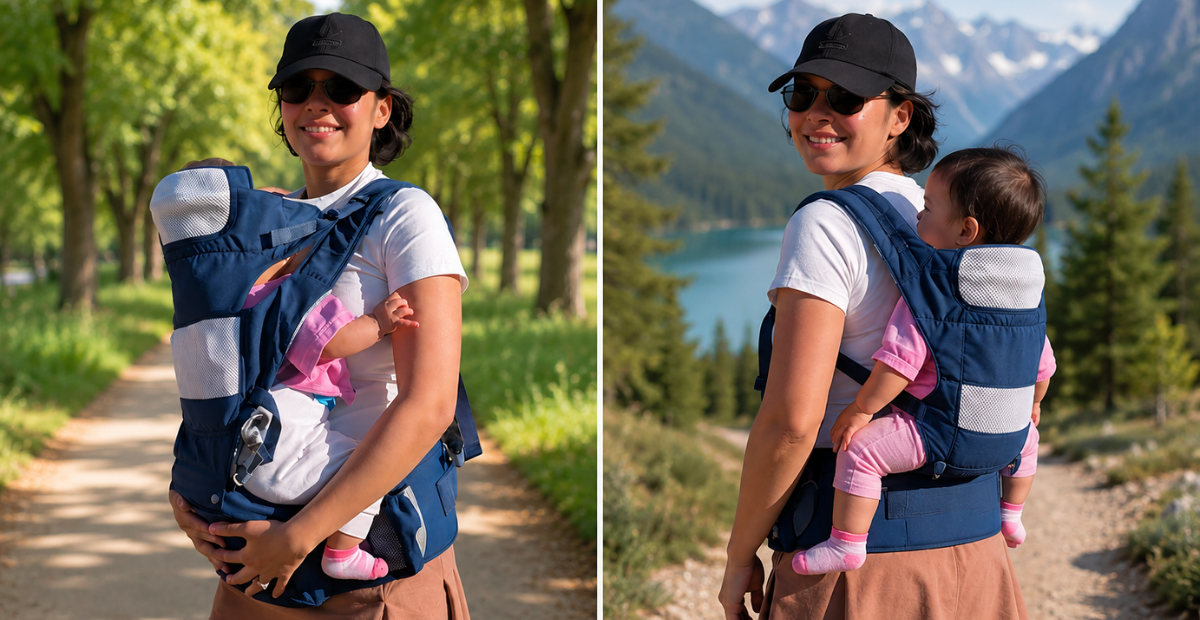
This is the position every carrier is built to start with, usable from birth. Your baby faces you, chest to chest, with full head and neck support if they don’t yet have head control on their own. It’s the position pediatric guidance recommends until your baby can hold their head upright independently — for most babies, sometime in the first few months.
Front Carry, Facing Outward: What to Know Before You Switch
Facing-outward carries let an older, curious baby take in the world while still riding close to you. This position generally isn’t recommended until your baby has strong, independent head and neck control — typically around 6 months — and even then, it’s usually recommended in short sessions rather than extended wear, since an outward-facing baby can’t rest their head against you the way an inward-facing one can, and it’s easier to miss overstimulation cues when you can’t see their face as easily. If your baby seems fussy, overstimulated, or sleepy during an outward-facing carry, switch back to facing inward.
Back Carry: When Your Baby Is Ready
Back carry is typically appropriate once your baby can sit unassisted with good trunk control — usually around 6 months, though every baby develops on their own timeline. At this stage your baby has the core strength to stay upright and centered on your back, which matters both for their comfort and for your ability to keep them properly positioned without being able to see them directly.
Step-by-Step: Your First Back Carry
- Practice over a soft surface — a bed or carpeted floor — until you’re confident, before trying it anywhere else.
- Fasten the waistband snugly above your hips, with the carrier panel hanging loosely in front of you.
- Bring your baby into a secure position on your back, keeping one hand supporting them at all times during the transition.
- Pull the carrier panel up and over your baby, then slip one arm at a time through the shoulder straps, like putting on a backpack.
- Lean slightly forward to keep your baby’s weight centered while you gently bounce or shift your hips to help them settle into a deep, seated position.
- Tighten both shoulder straps evenly until your baby is riding high and snug — keep one hand on them until both straps are fully secured.
Safety Checklist Before Every Switch
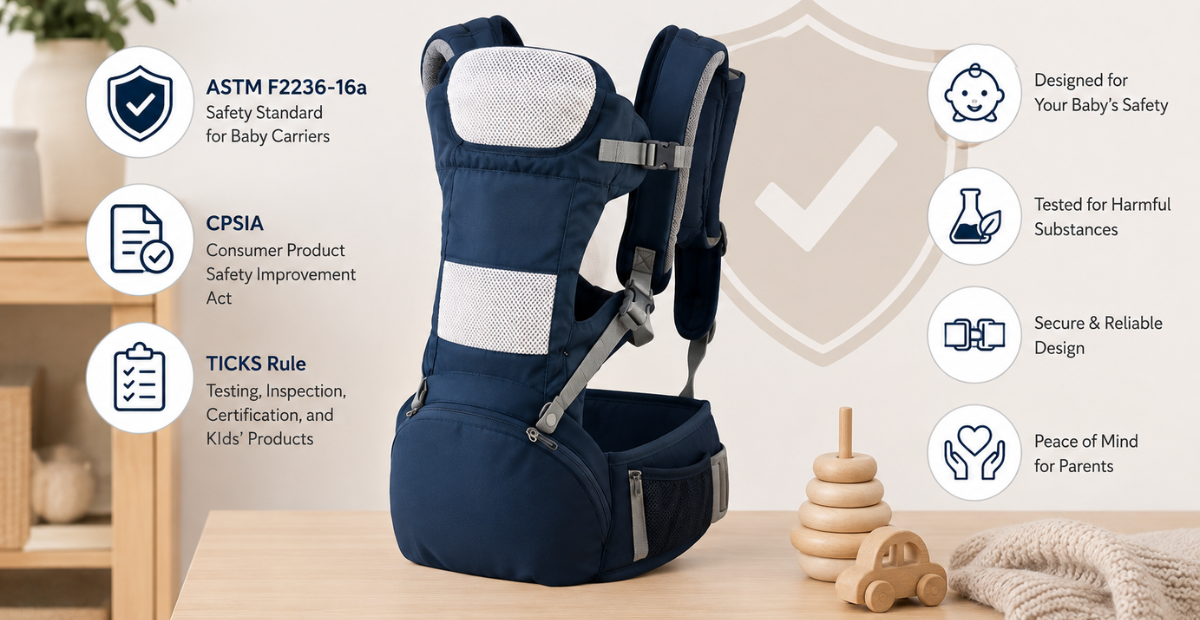
Whichever position you’re using, run the T.I.C.K.S. check every time: Tight fit, In view at all times (for front carries) or checked via mirror/helper (for back carries), Close enough to kiss, Keep chin off chest, Supported back in a natural curve. If anything on that list doesn’t check out, adjust before you go anywhere.
Frequently Asked Questions
Can I skip front carry and go straight to back carry once my baby is old enough?
You can, but front carry is worth keeping in rotation even after your baby can be carried on your back — it’s easier to monitor your baby directly, and useful for feeding or settling a fussy baby.
How long can I do an outward-facing carry?
Keep outward-facing sessions short, and switch back to facing inward at the first sign of fussiness, overstimulation, or sleepiness.
Do I need a different carrier for back carry, or does the same one work?
Not every carrier supports back carry — check the product specs before assuming. A carrier built with a convertible design will support the transition without needing a separate purchase.