


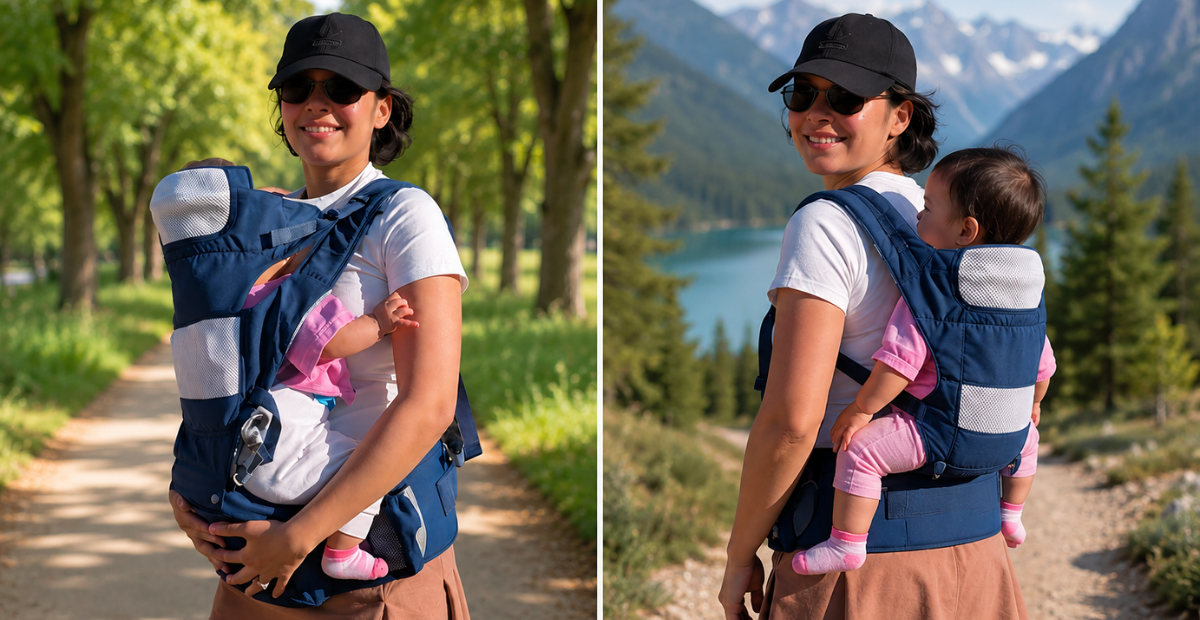
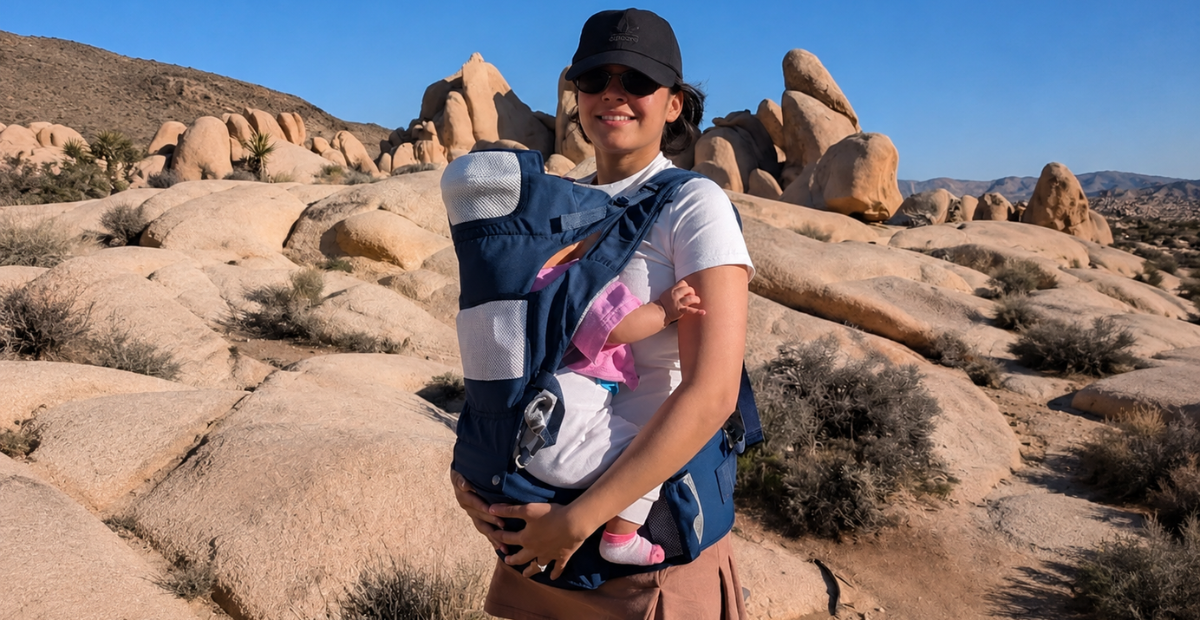
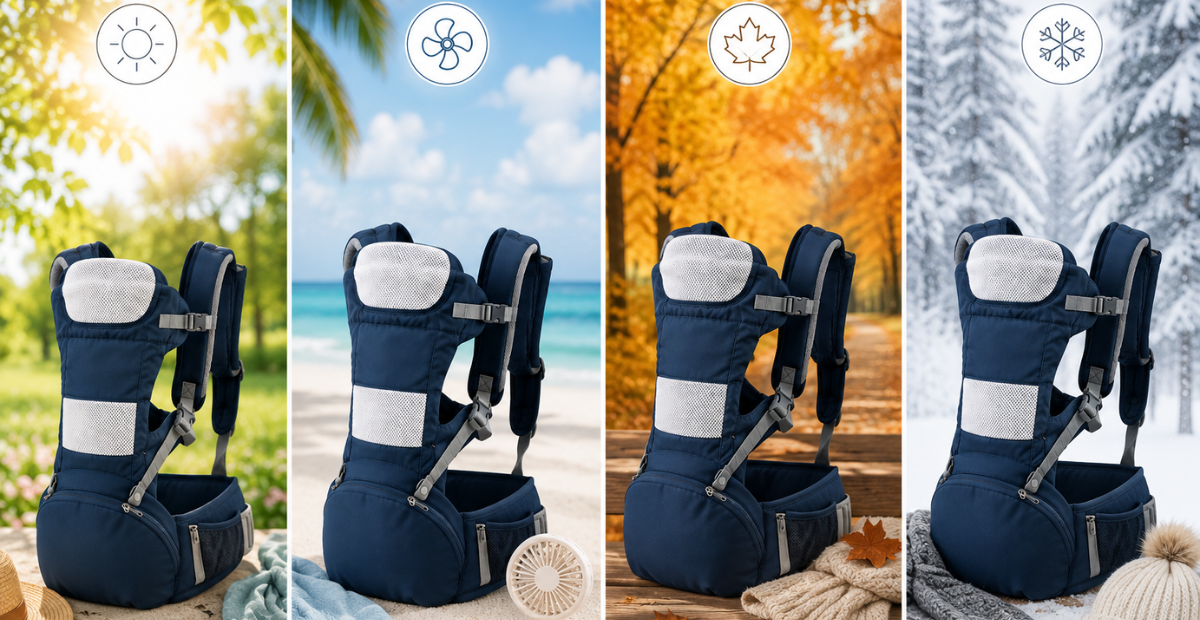
Babywearing is safe — when the carrier itself has been properly tested, and when you follow a few well-established rules every time you use it. Both halves matter equally: the best-engineered carrier in the world can’t protect a baby who’s positioned incorrectly, and perfect technique doesn’t make up for a carrier that was never tested to a real standard. Here’s what the certifications actually mean, and the rule to run through before every carry.
What Does “ASTM F2236-16a Certified” Actually Mean?
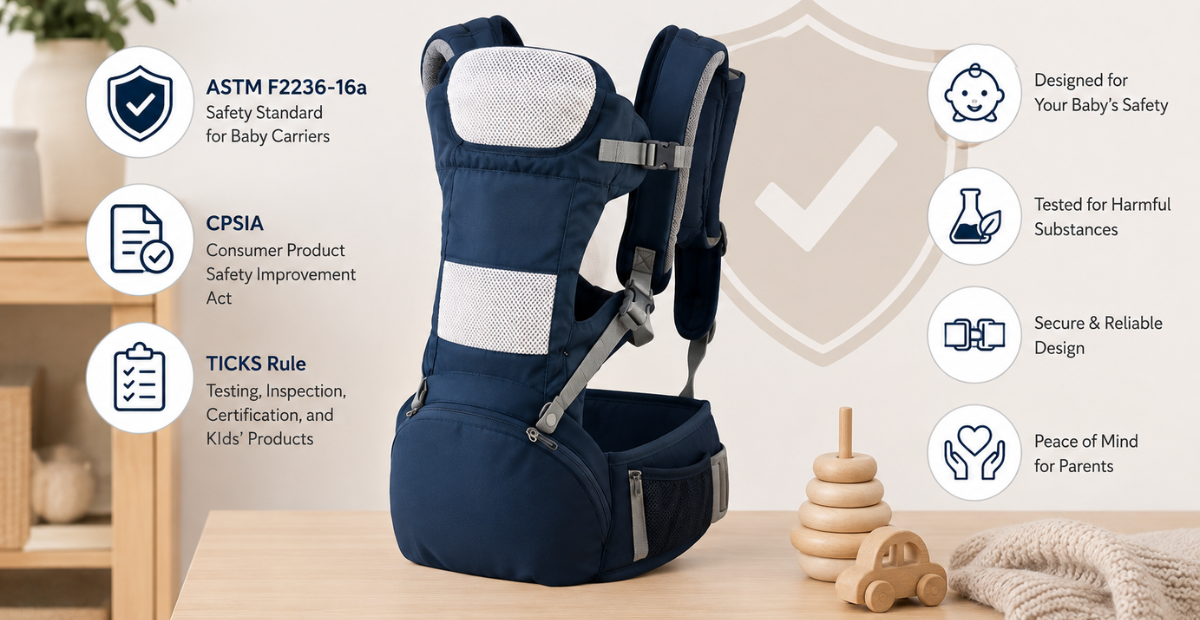
ASTM F2236-16a is the Consumer Safety Specification for Soft Infant and Toddler Carriers — a detailed set of performance requirements and test methods covering things like strap and buckle strength, seam integrity, and labeling requirements. It’s not a vague marketing claim; it’s a specific, named, independently testable standard. In the US, the Consumer Product Safety Commission enforces a federal mandatory standard built on this ASTM specification. When a carrier states it’s tested to ASTM F2236-16a, that’s a concrete, checkable claim — you can look the standard up yourself.
CPSIA: The Other Standard Behind Every Carrier
Separately from the carrier’s construction, the Consumer Product Safety Improvement Act (CPSIA) sets limits on substances like lead and phthalates in children’s products, and requires manufacturers to attach a permanent tracking label with information like the manufacturer, production date, and batch number — the label that lets a company reach you directly if a safety issue is ever identified with a specific batch. A CPSIA-compliant carrier should carry this tracking label; if you can’t find one, that’s worth asking about.
What Health Canada Says About Babywearing Safety
Health Canada publishes its own baby sling and carrier safety guidance, and it references the same ASTM F2236-16a specification used in the US — there isn’t a separate, distinct Canadian testing standard for soft carriers. For Canadian parents, that means a carrier tested to ASTM F2236-16a is meeting the same bar referenced by your own national health authority, not just a foreign one.
The T.I.C.K.S. Rule — 5 Checks for Every Carry
Certification covers the product. T.I.C.K.S. covers how you use it, and it’s worth running through every single time, not just when the carrier is new:
- Tight — the carrier should hold your baby snugly against you; a loose fit lets them slump, which can affect breathing.
- In view at all times — you should be able to see your baby’s face just by glancing down.
- Close enough to kiss — your baby’s head should be positioned high enough to kiss without you having to bend down.
- Keep chin off chest — there should be space between your baby’s chin and chest so their airway stays clear.
- Supported back — your baby’s back should curve naturally, with their tummy and chest against you.
Fall and Suffocation Risks to Know
The two hazards every carrier manual will call out are fall risk and suffocation risk. For falls: check every buckle, strap, and seam before each use, and always bend at the knees rather than the waist. For suffocation: babies under 4 months are at the highest risk, so never strap your baby so tightly it restricts breathing, always leave room for head movement, and if you nurse in the carrier, reposition your baby immediately afterward so their face isn’t pressed against your body.
Frequently Asked Questions
Is a carrier without a named safety standard automatically unsafe?
Not automatically, but it means the safety claim can’t be independently verified. A named, checkable standard like ASTM F2236-16a is a meaningfully stronger signal than an unspecified “safety tested” claim.
Do I need to check T.I.C.K.S. every time, even with a carrier I use daily?
Yes — fit can shift as your baby grows or as straps loosen through use, so it’s worth a quick check every time, not just the first few weeks.
Where do I find my carrier’s tracking label?
It’s typically sewn into an interior seam of the waistband or body panel — check the manual that came with your carrier for the exact location.